
Join us for coffee and conversation about research and teaching with faculty, students, administrators, and others interested in the intersections between Christianity and Communication Studies.
Our desire is to continue the kinds of rich conversations we have during our face-to-face pre-conferences each year at the National Communication Association. We hope to strengthen and extend our relational bonds and sense of community. No prep. No politics.
The meeting will take place Wednesday, May 27th from noon – 1 pm, EDT. Use this link to access the meeting.
Your hosts for this month are Tom Carmody (Vanguard University), CCSN Chaplain-in-Residence, and Robert Woods (Exec. Director, CCSN). We will discuss, among other topics of interest, how we would like to see this group function moving forward and a schedule for meeting in the upcoming academic year.
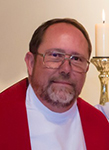 Tom Carmody (PhD, Regent University) currently serves as a Professor of Communication in the Communication Department of the Patty Arvielo School Business and Management at Vanguard University where he has taught for over 35 years. His research focus ranges from nineteenth-century American sermonic rhetoric, comic books and graphic novels to Anglican Studies. He is an ordained Anglican priest in the Anglican Church in North American and serves both the diocese of Churches for the Sake of Others (C4SO) and his local parish, Holy Trinity Anglican Church, in Costa Mesa, CA. As CCSN’ Chaplain in residence, Dr. Carmody will provide prayer, reflection, and other devotional material and activities to address the intellectual work and spiritual lives of those serving in the Academy. We are blessed to have him. Learn more about Tom.

Robert H. Woods Jr. (PhD. JD, Regent University) served as Professor of Communication and Media at Spring Arbor University for 20 years. He currently serves as the Executive Director of the Christianity and Communication Studies Network (CCSN) (www.theccsn.com), a non-profit network providing resources and training on faith-learning integration in the field of communication studies. He is the editor-in-chief of the CCSN’s imprint, Integratio Press. Dr. Woods has served as the President of the Religious Communication Association (RCA) and was named Scholar of the Year by RCA. He is the recipient of multiple research and scholarship awards and the editor/author of over a dozen books. Most recently, Dr. Woods is the co-author with Paul Patton on Everyday Sabbath: How to Lead Your Dance with Media and Technology in Mindful and Sacred Ways and Professing Christ: Christian Tradition and Faith-learning Integration in Public Universities. His book co-authored with Kevin Healey (University of New Hampshire), titled Ethics and Religion in the Age of Social Media: Digital Proverbs for Responsible Citizens received the Book of the Year Award from RCA. He recently served as a visiting scholar at Trinity Western University. Connect with Robert here.
Oh, and why the raven?
As you may know, all our groups/clubs/societies have birds as ambassadors. Why did we choose the raven, especially given its sometime negative cultural connotation?
Our current director of the Christian Communication Scholars Society (CCSS) (our professional society for grad students), Mark Gring (Texas Tech University), offered a compelling argument in support of the raven–that is, culturally redeeming the raven–which gets to the heart of the CCSN’s mission. Mark’s thoughts below were offered as we discussed which bird to choose for the CCSS (we ended up with a falcon, by the way). I have pasted Mark’s thoughtful reflections below in case you are curious. Thanks, Mark!
Courtesy of Mark Gring
- What about a Raven, instead? (Yes, eagles and doves are overused in our culture).
- It is the first bird released by Noah to seek out dry land. (It is strong, resilient, can travel far on little, and it “seeks out dry land”—what those in the ark long for.) (Gen. 8:6-7)
- It is the type of bird God uses to send bread and meat (nourishment) to the prophet Elijah when he was on the run from those who sought to take his life. (Again, they are strong, self-sacrificial—they don’t eat the food—and they are used to bring nourishment to God’s people). (1 Kings 17:1-7)
- In the Song of Solomon, his dark hair is described as “black as a raven” (Song of Songs, 5:11).
- In Luke 12:22-24, when Jesus tells his disciples to “not be anxious about your life…,” he gives the example of the ravens (12:24) “…who neither sow nor reap, but God feeds them.”
- Negatives of Ravens:
- They are one part of the set of birds that are “detestable” for food (Leviticus11:12-19), likely because they are carnivores (but not exclusively.
- In much of the European-American literature, they represent war, death, and destruction. I am not sure how other cultures see it in their literature, though.
- They are seen in some literature as representing negative omens, for danger and death.
- When ravens get together in groups, they are referred to as “a mob of ravens.” (Ummm…not unlike some upset graduate student behavior I have occasionally seen in my 25+ years of working with them).
. . . The image of the raven has both the positive side (when used by God) to seek “solid ground,” bring nourishment, they display a desirable beauty, and God uses them as examples of His provision for us all. When NOT used by God (except in the larger scale of God’s providence), they also carry a negative, destructive symbolism that our contemporary literature seems to emphasize more.