
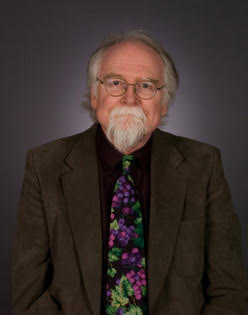
In Loving Memory of Michael P. Graves (1943–2026)
Dr. Michael P. Graves—beloved teacher, scholar, colleague, mentor, poet, and friend—entered the fullness of Christ’s eternal light after a lifetime spent illuminating that same light for others. For nearly five decades, Michael shaped generations of students and scholars through a rare combination of intellectual rigor, spiritual depth, and a gentle, joyful presence that made the Christian life both credible and compelling.
Born in Berlin, New Hampshire in 1943, Michael moved with his mother and great uncle and aunt to Fresno, California, at the age of three. His Algerian uncle, a dynamic pastor, became one of the earliest and most enduring influences on Michael’s moral and spiritual imagination. That early witness to faith was vibrant, courageous, and deeply compassionate, and became the quiet engine of Michael’s life’s work.
As a teenager, Michael poured himself into Cru (formerly Campus Crusade for Christ) and sang in a gospel quartet, already blending faith, artistry, and communication in ways that would define his vocation. He began his undergraduate studies at Biola College, where he met the love of his life and partner in scholarship, Darlene. Their 62-year marriage became a living testimony to shared calling, intellectual companionship, and steadfast love.
Michael completed his master’s degree at Cal State LA and began teaching at Azusa Pacific University. Because Darlene was an Evangelical Quaker, Michael immersed himself in Quaker history and theology—an exploration that became his lifelong scholarly focus. His research on early Quaker preaching, impromptu rhetoric, and the inward light would eventually shape conferences, classrooms, and publications across decades.
After earning his PhD at USC under the mentorship of Walter Fisher, Michael and Darlene moved with their young family to Oregon where he taught at George Fox College for 15 years. There he wrote poetry, performed in Darlene’s theater productions, built a home, and ran a small farm, all embodying the Quaker integration of work, worship, and wonder.
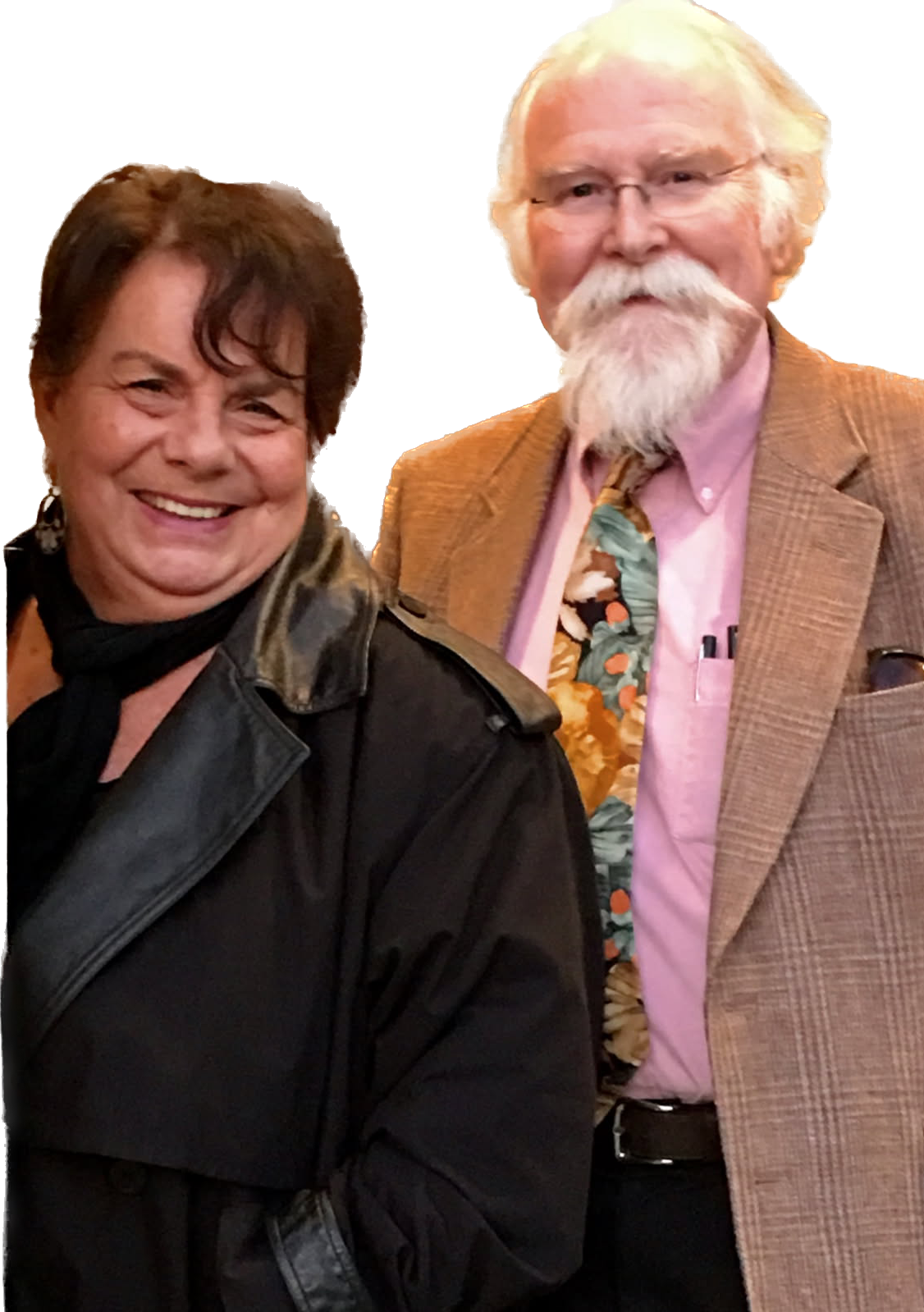
In 1983, Michael joined the faculty at Regent University, where he and his colleagues helped establish the doctoral program in communication studies. For 18 years he served as professor, mentor, chair, and associate dean, shaping the intellectual and spiritual culture of the program. He later taught at Liberty University, helping to establish a master’s degree in communication, and then at Westmont College before retiring to Oxnard, California, where he and Darlene delighted in the cool ocean breeze and the quiet rhythms of retirement.
Michael’s scholarly contributions were both wide-ranging and deeply influential. He authored more than forty articles and reviews in journals such as Quarterly Journal of Speech, Rhetoric and Public Affairs, Studies in Popular Culture, Review of Religious Research, Journal of Communication and Religion, and Quaker Studies. He received four NEH Summer Seminar fellowships, served as president of the Religious Communication Association, and miraculously won its Best Essay Award three times (1985, 2001, 2008) as well as Book of the Year (2010). His co-edited volume More than “Precious Memories”: The Rhetoric of Southern Gospel Music received the 2005 Ray and Pat Brown Award for best edited book in Popular Culture Studies. His culminating scholarly work, Preaching the Inward Light (Baylor University Press, 2009), distilled nearly four decades of research on early Quaker preaching.
Yet Michael’s deepest legacy was not his scholarship, but his students.
Michael taught with a transformational style that blended prayer, critical analysis, humor, empathy, and a fierce commitment to proper grammar. He stretched students’ minds far beyond their constricted boundaries, inviting them into contact with beautiful art, moral imagination, and the rhetorical passions of charity and justice. He believed in his students long before they believed in themselves. Because of Michael, many published for the first time, found their first faculty positions, and discovered that they had a legitimate voice at the table of scholarship.
Michael guided countless students out of dark times with a shepherd’s heart. His rod of critical analysis and his staff of gentle care lifted them from the rocky crags of research and life. He prayed about his scholarship, welcomed the Spirit’s guidance in his teaching, and integrated faith and learning with a depth that left an indelible mark on all who knew him.
Michael’s humor was wry, delightfully mischievous, and legendary. He could laugh like a Friend, reprove with kindness, and tell stories that lingered in the heart. His moral courage was equally memorable. When asked to choose between a friend and an institution, he chose friendship without hesitation. His life embodied the cardinal virtues of fortitude, justice, prudence, and temperance, wed seamlessly to the theological virtues of faith, hope, and love.
He was the first Quaker many students and colleagues ever met, and, for many, the one who shaped their academic and spiritual paths. His prophetic imagination and unwavering witness to Christ’s light made him a steady presence in the midst of academic storms.
For those who studied with him, worked alongside him, or simply shared a hallway conversation, Michael Graves remains a luminous presence. His life was a testimony to the power of faith-infused scholarship, the beauty of authentic teaching, and the enduring impact of a gentle, courageous soul.
As renowned Quaker William Penn wrote, “Death is no more than a turning of us over from time to eternity.” Michael has turned toward eternity’s light. No grave will keep him. He is risen with Christ. And we his students, colleagues, friends, and fellow travelers give thanks for the extraordinary gift of his life.
Michael is survived by his beloved wife, Darlene, daughter (Monica Rachel Graves), son (Aaron Paul Graves), three grandchildren (Tanner, Logan, and Michaela), and three great grandchildren.
For those interested in supporting Michael’s enduring legacy, a book of his poetry will be published posthumously through Integratio Press, an imprint of the Christianity and Communication Studies Network. If you would like to help support this publication, please contact Integratio Press’ editor-in-chief, Robert Woods (rwoods@theccsn.com).