
Journal of Christian Teaching Practice, volume 13.
Reviewed By: Kevin Jones, PhD, Professor of Communication
Reviewer Affiliation: George Fox University
Total Pages: 180
ISBN: 978-1-959685-37-1
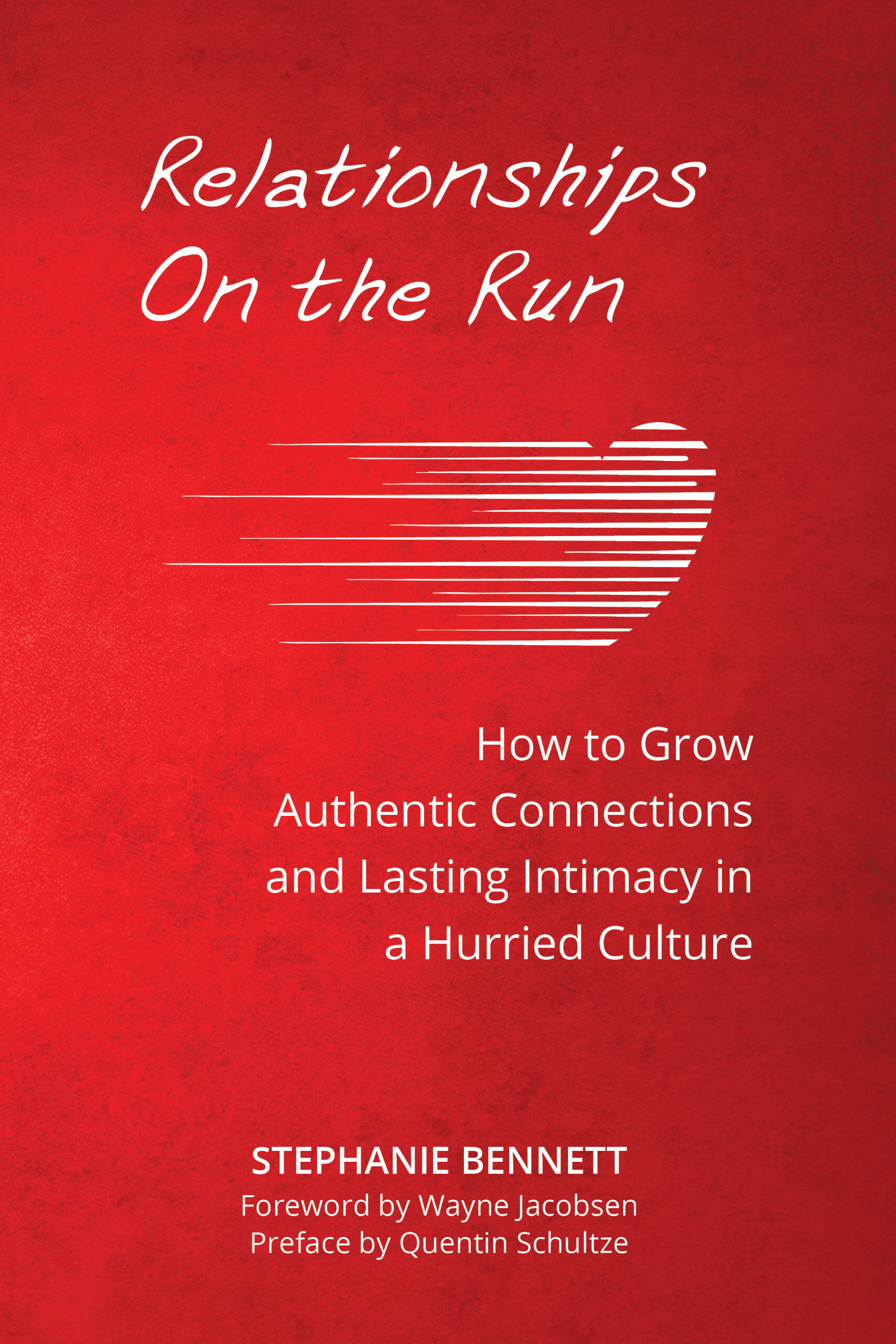
Book Reviewed: Stephanie Bennett, Relationships on the Run: How to Grow Authentic Connections and Lasting Intimacy in a Hurried Culture. Integratio Press, 2026.
Reviewed by: Kevin T. Jones, PhD

Reviewer Affiliation: Department of Communication Studies, George Fox University
Total pages: 188
ISBN-13: 978-1-959685-37-1
In their book Everyday Sabbath, authors Paul Patton and Robert Woods (2021) confront the dilemma of consuming media and pop culture without compromising our faith. Some Christians choose to disavow pop culture (avoiding movies, non-Christian music, video games, etc.) in response to Paul’s admonition in Romans 12:2, “And be not conformed to this world: but be ye transformed by the renewing of your mind . . .” (KJV). Others see pop cultural trends as unavoidable and work to find a way to live in the world without being conformed to it. This approach requires one to approach media and culture with a renewed mind. As Patton and Woods put it, “Sacred intentionality connects our pop culture desires to God’s call to serve” (38). The question is, how do we work “with” our pop culture influences, rather than denounce them altogether?
In Relationships on the Run, Stephanie Bennett offers some tools to help the reader renew their mind and find the desired balance in a world saturated with digital media, knowing that this technology is both a blessing and a curse. On the one hand, we have instant news, increased communication channels, and volumes of information at our fingertips. On the other hand, we also have a rise in self-esteem problems, depression, and identity crises. Nonetheless, digital media is a part of our lives and is not going away. Bennett embraces this conclusion and offers chapters on various aspects of interpersonal communication that are easily hurt by modern technology but do not have to be, such as conversations, intimacy, perception, emotions, conflict, relationships, and solitude.
Each chapter identifies an area of communication and relationships, explores biblical principles to help the reader (or small group) think through that area in light of their faith, and ends with a short list of questions to help them explore applying these principles to life. This chapter structure makes the book broadly applicable to the classroom as a supplemental reading, an individual who just wants to navigate their faith in this world, or a small group in a church setting. At times, academics might find Bennett’s explanation of communication theories to be lacking, but they are well adequate for non-academic readers.
The first chapter acknowledges the saturation of digital communication in our lives and asserts that there is a difference between drowning in technology and using it to benefit relationships. Since cell phones can increase the already-rapid pace of life and rob relationships of quality communication, Bennett argues for exploring ways to reclaim relational moments that can easily get lost. After laying the foundational argument of Chapter 1, Bennett begins exploring different areas of communication that warrant attention.
Chapter 2, “Feeling the Power of Presence,” notes how the enticement to use digital media can rob a relationship of the “presence” or the quality engaged communication that fosters strong healthy relationships. While “spoken words have the power to enhance our relationships through physical and emotional intimacy,” digital communication can readily deprive them of that intimacy (16). It can also serve as a cop-out from responsibility for hurtful actions. I remember when I first began hearing stories of couples fighting and even breaking up over text messages. That sounded so cold, sterile, and impersonal to me. Yet this approach is tempting because it removes the need to be “present” with the person and face their emotional and relational pain.
Chapter 3 explores how media can create distractions on our faith journey as people look to media rather than Scripture for examples of love. Hallmark has dedicated an entire TV channel to “perfect” love stories. There is nothing innately wrong with this except when biblical love is missing from the equation. Bennett devotes several pages to exploring biblical love and showing how media portrayals of love can detract from what the Bible has to say on the topic. Bennett ends the chapter with wise counsel: “In summary, true love, lasting friendship, solid, and flourishing family life requires true, self-giving love. It requires taking a strong look at the cultural fallacies of love we may have taken on” (35).
Chapter 4, “Listening to Love,” takes on one of the most challenging topics in interpersonal communication. “Listening,” Bennett argues, “is the heart of communication” (40). I tell my students syllogistically that if God is love, and God listens, then listening is loving. Bennett explains, “We listen relationally with a goal to comfort, respect, and understand” (41). She then discusses media-related listening distractions that can overtake us and offers ways we can work to improve listening skills, while wisely noting that how-to lists cannot always create presence or human connection. The author explains, “Listening is much more than gaining a few new tools to add to our communication toolkit. The art of listening is a gift that can help each of us get ready for the joy and refreshment of life-long relationships” (50).
Chapter 5 discusses the importance of human conversation and how digital media can rob relationships of this form of human connection. Bennett acknowledges that “[d]eep conversation often involves a bit of risk” because “it doesn’t always feel safe to share personal feelings, experiences, and opinions” (55), and she recognizes that digital communication makes it easier to avoid the risk. Texted comments can shield the sender from vulnerability, embarrassment, or shame. Yet vulnerability is a risk a communicator must be willing to confront if they are to create emotional intimacy. In this chapter, I was left wanting more “how to” steps for the hard stuff.
Chapter 6, “Discovering Paths Toward Intimacy,” allows Bennett to confront a topic that is often misunderstood because people confuse its emotional and physical forms. For example, when I ask college students to define intimacy, almost without fail, males include some sort of physical involvement or sex while females rarely mention sex but use words such as emotional connection or feeling safe to be vulnerable. These types of mismatched expectations open the door for Bennett to address the role of sex in intimacy and affection. As a person of faith writing to other people of faith, the author does not hold back on spiritual language: “Sex is holy. Sexual expression is holy and good . . . The media have distorted sexual love and gravely misinterpreted it to be synonymous with freedom and pleasure, cheapening lovemaking into something mundane instead of sacred” (69). The chapter concludes, “So many relational issues can be successfully addressed by attending to our needs for emotional and physical affection” (74). Bennett offers several ways to explore the role of emotional and physical attention throughout the chapter.
Building on this foundation, Chapter 7, “Thinking About Who You Are,” explores the importance of understanding yourself and how that understanding affects intimacy in relationships. Bennett explores a variety of topics, from spiritual formation to codependency. For example, Bennett identifies the potential damage that digital communication can cause to our self-worth: “Digital culture creates a multitude of new opportunities to share slivered pieces of ourselves—enjoying great breadth in the number of people we’re loosely connected to but missing out on the depth and joy of truly being known” (87). Chapter 7 ends with questions that require challenging, honest, vulnerable reflection, and I applaud that!
Chapter 8, “Growing Closer Emotionally,” allows Bennett to further confront some sensitive topics. For instance, the author clarifies the difference between sex and emotions: “Contrary to popular depictions, romantic passion isn’t synonymous with the lusty fire of lovemaking” (89). Nor does connecting emotionally make a person weak; rather, it is an integral part of a healthy sexual relationship. As Bennett declares, “The journey toward sexual intimacy begins long before a trip to the bedroom. It begins with respect, interest, kindness, curiosity gentleness, self-control, and care” (93). She does a good job of addressing several reasonable concerns surrounding media, emotions, intimacy, and sexual confusion and provides a great opportunity for self-reflection.
Chapter 9, “Working Through Relational Conflict,” confronts the truth that every relationship, no matter how strong, will eventually have conflict. The first eight chapters have successfully laid a foundation that, if learned, can help the relationship navigate this often-feared topic. Bennett explores how popular music portrays conflict and the pitfalls that can result. She also bravely confronts how much conflict results from pride and lack of humility. Finally, Bennett helps the reader understand how important humility and forgiveness are in a healthy relationship.
Chapter 10, “Addressing Chaos in Relationships,” argues that it takes work to keep relationships from falling apart and presents some tools to navigate that work, focusing on the value of consideration, confession, and communion. I concur with Bennett’s conclusions, as I have often found that couples at marriage events want some sort of quick fix to undo the mess they spent years creating, instead of doing the long, hard, patient work that is needed.
Chapter 11, “Finding Strength and Solace in Solitude,” reminds the reader of the value of silence in a relationship. For many couples, silence is scary and can easily be interpreted as lack of connection. Bennett notes, however, that silence and solitude can actually strengthen connection by allowing a person to watch their words, which often prevents conflict or chaos.
Bennett concludes with Chapter 12, “Powering Relationships with Prayer.” Here, she reminds the reader that as a person of faith, if you are ignoring prayer in your relationship, then you are missing a tremendous privilege and opportunity to build a strong foundation for your relationship, whether romantic or platonic.
Taken together, Relationships on the Run makes an excellent supplemental reading for courses in interpersonal communication, family communication, or gender communication at a faith-based institution. The book would also be useful in a church context for premarital counseling, adult bible study or discussion group, or any discussion group involving relationships. Writing for a cross-over market of academia and a lay church audience can be challenging, as I know from personal experience (Jones, 2024). The academic audience wants more theory and research, while the lay audience wants more practical material that is more applicable to their lives. Bennett has done a good job of navigating this tightrope walk, and I believe both audiences will find this book to be helpful, insightful, and beneficial.
References
Jones, Kevin T. Unwrapping the Gift of Communication: Theoretical Applications and Biblical Wisdom for Relationships that Thrive. Pasco, WA: Integratio Press, 2024.
Patton, Paul D. and Robert H. Woods. Everyday Sabbath: How to Lead Your Dance with Media and Technology in Mindful and Sacred Ways. Eugene, OR: Cascade Books, 2021.